What Log Temperature Does to Carbide Debarker Tip Performance in Winter Operations
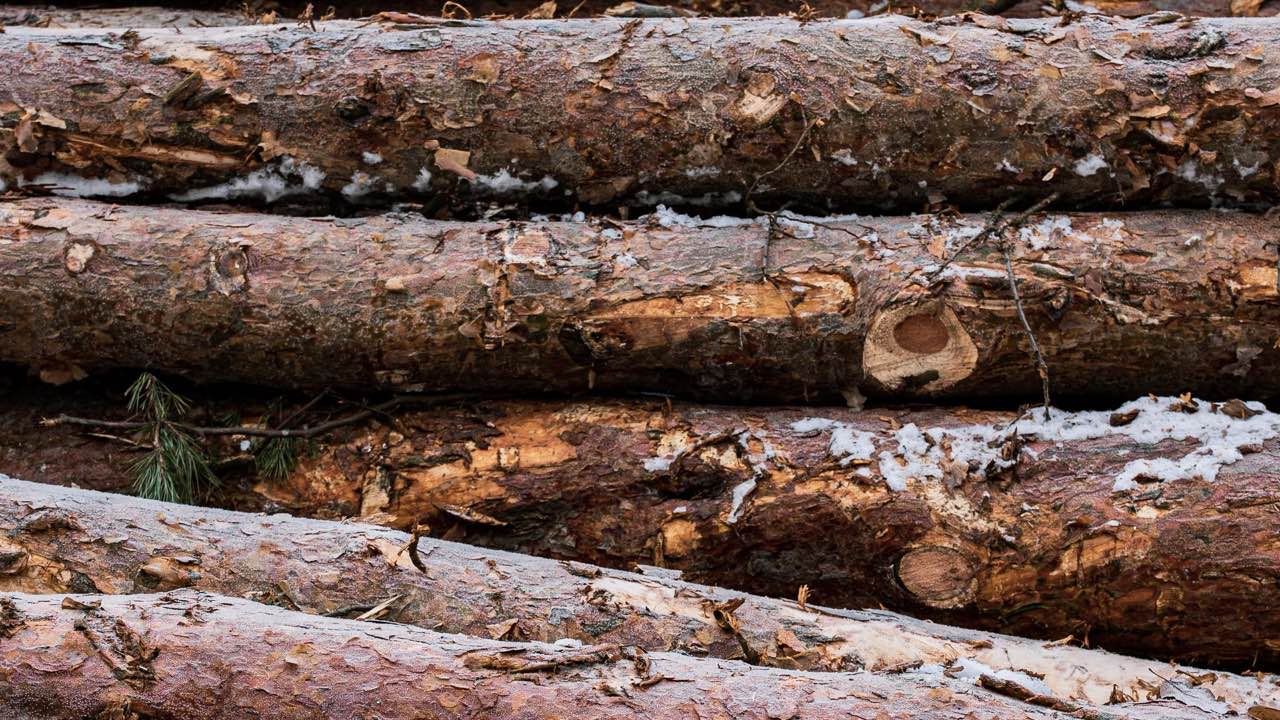
Running a ring debarker through a northern winter with frozen log decks is a different proposition from running the same machine on fresh-cut summer timber. The logs are colder, the bark behaves differently, and the carbide tips take a different kind of abuse than they do in warm weather. Operations that don’t account for temperature effects in their tip selection and maintenance practices end up with tip failure patterns that don’t make sense until you trace them back to the cold.
How Cold Changes the Bark-Wood Bond
The key mechanical property that debarking exploits is the difference in adhesion strength between the bark and the wood beneath it. In living or freshly harvested timber, this interface is relatively easy to disrupt — the cambium layer is moist and soft, and the bark separates cleanly under the mechanical force of the debarker tips working against the log surface.
As log temperature drops, several things change at once. The moisture in the bark and at the bark-wood interface freezes, bonding the bark more firmly to the wood. The bark itself becomes more brittle and less compressible. The wood beneath the bark hardens slightly as cold reduces the flexibility of the wood fiber structure. All of this means the debarker has to work harder to achieve the same separation that warm-weather timber provides easily.
The practical result: tip loading increases in cold weather even if everything else — log species, tip speed, feed rate — remains constant. Tips that are running at a comfortable load in September are working significantly harder in January on the same timber source.
Carbide Behavior at Cold Temperatures
Carbide is a ceramic-metal composite, and like most such materials, it becomes slightly more brittle at cold temperatures. The cobalt binder that holds the tungsten carbide grains together has a specific performance profile, and at temperatures well below freezing, the toughness margin that carbide normally has above its working stress decreases. The tip is more vulnerable to brittle fracture from sudden impact loads in cold conditions than in warm conditions with the same applied force.
The sudden impact loads come from bark sections that freeze solid against the wood and then release suddenly rather than peeling progressively. A frozen bark patch that separates all at once delivers an impulse load to the tip rather than a progressive force — exactly the load type that most stresses carbide. Carbide debarker tips that run without fracture problems through the summer can show chipping and fracture events in winter on the same timber without any change in operating parameters.
The brazed joint between the carbide tip and the steel tip body is also affected. The braze alloy and the carbide and steel have different coefficients of thermal expansion, and at sustained low temperatures, differential thermal contraction creates residual stress at the joint. This residual stress adds to the operating stress on the joint during cutting, which is one reason winter operations see more brazed-joint failures than summer operations on the same machine.
Operational Adjustments for Cold Weather
The most effective cold-weather adjustment is log conditioning — bringing frozen or near-frozen logs up to a temperature where the bark-wood bond behaves more like warm-weather timber before the logs enter the debarker. Operations that have water spray systems on their log decks use them more aggressively in winter, and some operations with covered log storage or heated conditioning areas see substantially better winter debarking results than those working with fully frozen incoming timber.
Where log conditioning isn’t practical, adjusting the operating parameters of the debarker compensates for some of the increased difficulty. Reducing feed rate when working through frozen timber reduces the peak tip loading per unit time, which gives the tips better odds of staying within their fracture toughness limit when frozen bark patches release suddenly. This costs throughput but reduces tip breakage events — and a tip that fractures and damages adjacent components is more expensive than the production lost to a slightly reduced feed rate.
Tip speed adjustments in ring debarkers affect the energy available at each tip contact. In cold conditions where bark adhesion is higher and release is less predictable, a slightly reduced tip speed can reduce the impact energy of sudden bark-release events while still delivering adequate debarking force. The right adjustment depends on the specific machine, the species, and how frozen the incoming timber is — there’s no universal setting, but the principle of reducing loading variability applies consistently.
Tip Selection for Cold-Weather Operations
Operations that run through significant cold-weather periods should consider whether their standard-season tip specification is appropriate for winter conditions. A tip grade with higher cobalt content — more toughness at the cost of some wear resistance — handles the impact variability of frozen timber better than a harder, more wear-optimized grade. The wear life advantage of the harder grade disappears if the tip is fracturing before it reaches its normal wear-out point.
Some operations run a tougher tip grade through the winter months and switch to a more wear-optimized grade in warm weather. The inventory management overhead is modest, and the improvement in tip life through the difficult winter period makes the two-specification approach worthwhile for any operation that runs significant cold-weather volume.
Tip inspection frequency should also increase in winter. Partial fractures — chips that take a section of carbide but don’t remove the tip entirely — can propagate under continued cold-weather loading in ways that don’t happen in warmer conditions. A tip with a partial fracture that might run safely for another shift in summer can fail completely in winter when the next frozen bark impact hits the weakened area. More frequent checks catch partial fractures before they become total tip failures that damage the holder or the rotor.